
2026-09-09 · Victor Reinhart
How Castle Rock Altitude Impacts HVAC Efficiency
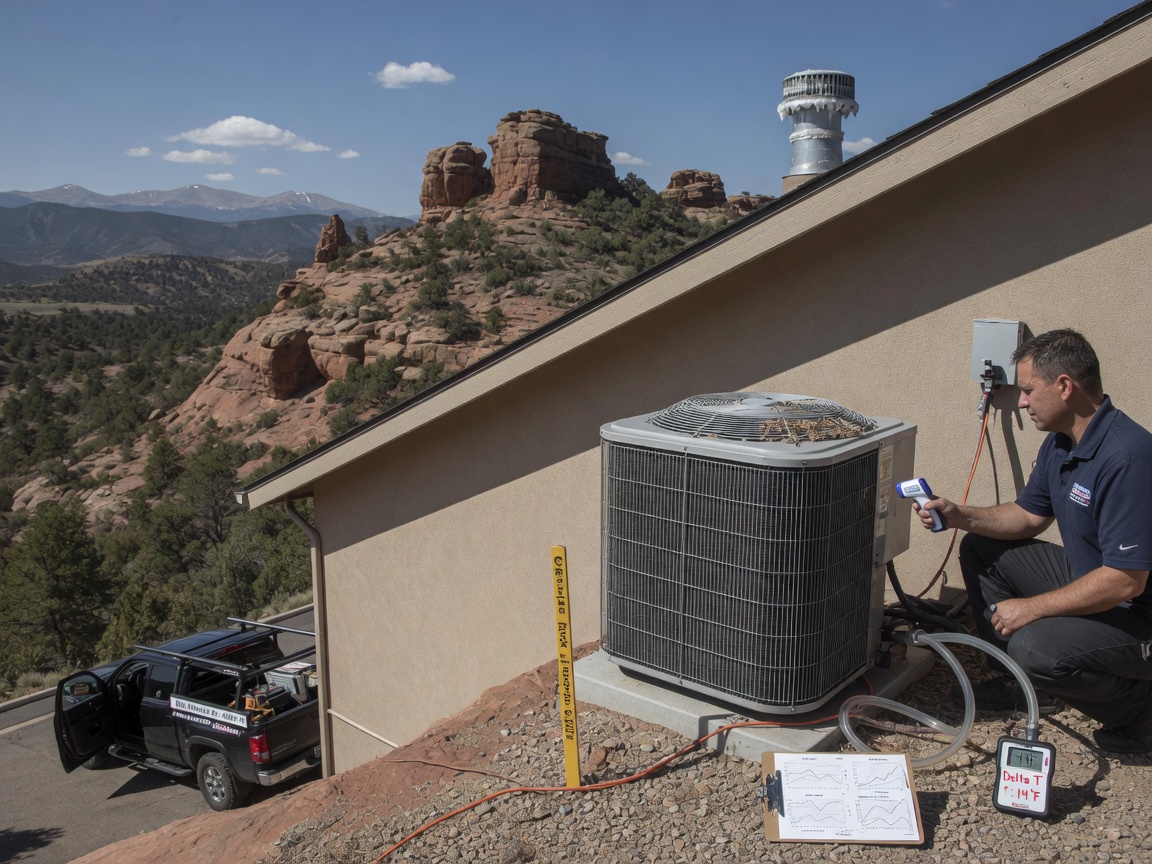
Castle Rock's elevation of about 6,200 feet reduces air density enough to cut furnace combustion efficiency by several percentage points unless burners receive specific derating and orifice changes. The thinner atmosphere supplies less oxygen per cubic foot, so standard sea-level settings produce incomplete burns, higher fuel use, and more carbon monoxide risk during the long snowy winters common in Douglas County.
Combustion Changes in Gas Furnaces
At this altitude the reduced oxygen forces a furnace to work harder to maintain the same BTU output. In neighborhoods like The Meadows and Founders Village, where many homes built in the 1990s and early 2000s still use original equipment, technicians routinely measure lower flame temperatures and adjust gas pressure or install high-altitude kits. Without these steps, systems cycle longer, raise utility bills, and accelerate wear on heat exchangers during the sudden cold snaps that hit after sunny fall days. Homeowners in Downtown Castle Rock often notice the difference first because older single-story houses have less insulation and lose heat faster once the furnace runs inefficiently.
Regular heating maintenance catches these issues before winter arrives. Technicians check manifold pressure, combustion analysis, and vent sizing that must all be recalibrated for local conditions rather than factory defaults.
Cooling Performance at Altitude
Air conditioning efficiency also drops because thinner air carries less heat away from condenser coils. In semi-arid Castle Rock summers with intense sun and low humidity, units must run longer to reach the same indoor temperature. Homes near the Castle Rock Outlets or Rock Park see this effect amplified by afternoon wind that further reduces effective airflow across coils. Systems that were sized correctly at lower elevations can short-cycle or struggle to dehumidify when the air holds less moisture to begin with.
Technicians serving Parker, Highlands Ranch, and Lone Tree routinely verify that condenser fan speeds and refrigerant charge match the thinner atmosphere. Small adjustments here prevent the higher energy draw that shows up on summer electric bills.
Practical Steps for Local Homeowners
Start with a combustion test and static pressure reading on any furnace older than eight years. In Douglas County, where soil is rocky and drainage varies, outdoor units also need level pads and clear airflow to compensate for the altitude penalty. Checking filters monthly becomes more important because dust from dry conditions loads coils faster than at sea level.
When problems appear, furnace repair crews familiar with high-altitude operation can restore efficiency quickly. Pair that service with the guidance in Common Furnace Issues During Castle Rock Cold Snaps to anticipate the exact failures that occur once temperatures drop below freezing.
Finally, review the full Seasonal Checklist For Preventing HVAC Breakdowns each fall and spring. These steps keep equipment matched to Castle Rock's actual air density instead of generic manufacturer assumptions.